

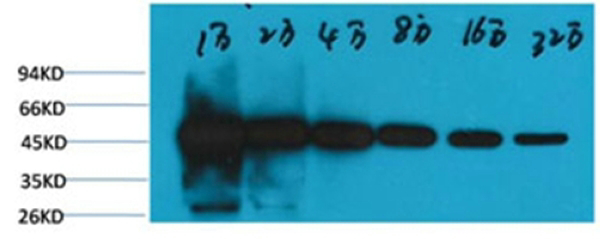
mono-ihc-rat-heart.jpg)
mono-ihc-mouse-heart.jpg)
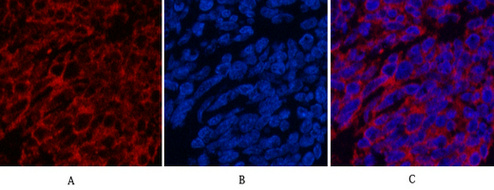
Main InformationTargetTubulin βHost SpeciesMouseReactivityHuman, Rat, Mouse, Mk, Dg, Ch, Hamster, Rabbit, sheep, Insect, YeastApplicationsWB, IF, IHCMW55kD (Observed)Conjugate/ModificationUnmodifiedDetailed InformationRecommended Dilution RatioWB 1:1000-1:3000; IHC 1:50-1:200; IF 1:200FormulationLiquid in PBS containing 50% glycerol, 0.5% BSA and 0.02% sodium azide.SpecificityTheβ-tubulin antibody can detects endogenousβ-tubulin protein.PurificationThe antibody was affinity-purified from mouse ascites by affinity-chromatography using epitope-specific immunogen.Storage-15°C to -25°C/1 year(Do not lower than -25°C)Concentration1 mg/mlMW(Observed)55kDModificationUnmodifiedClonalityMonoclonalClone Number5G3Antigen&Target InformationImmunogen:Recombinant Protein of β-tubulin (HRP Conjugated)Specificity:Theβ-tubulin antibody can detects endogenousβ-tubulin protein.Gene Name:TUBBProtein Name:Tubulin beta chain (Tubulin beta-5 chain)Other Name:Tubulin beta chain ; Tubulin beta-5 chain ;Background:This gene encodes a beta tubulin protein. This protein forms a dimer with alpha tubulin and acts as a structural component of microtubules. Mutations in this gene cause cortical dysplasia, complex, with other brain malformations 6. Alternative splicing results in multiple splice variants. There are multiple pseudogenes for this gene on chromosomes 1, 6, 7, 8, 9, and 13. [provided by RefSeq, Jun 2014],Function:Domain:The highly acidic C-terminal region may bind cations such as calcium.,Function:Tubulin is the major constituent of microtubules. It binds two moles of GTP, one at an exchangeable site on the beta chain and one at a non-exchangeable site on the alpha-chain.,online information:Tubulin entry,similarity:Belongs to the tubulin family.,subunit:Dimer of alpha and beta chains.,tissue specificity:Ubiquitously expressed with highest levels in spleen, thymus and immature brain.,Cellular Localization:Cytoplasm, cytoskeleton .Tissue Expression:Ubiquitously expressed with highest levels in spleen, thymus and immature brain.Research Areas:>>Phagosome ; >>Gap junction ; >>Alzheimer disease ; >>Parkinson disease ; >>Amyotrophic lateral sclerosis ; >>Huntington disease ; >>Prion disease ; >>Pathways of neurodegeneration - multiple diseases ; >>Pathogenic Escherichia coli infection ; >>Salmonella infection
商品信息已成功复制,启研竭诚为您服务


